
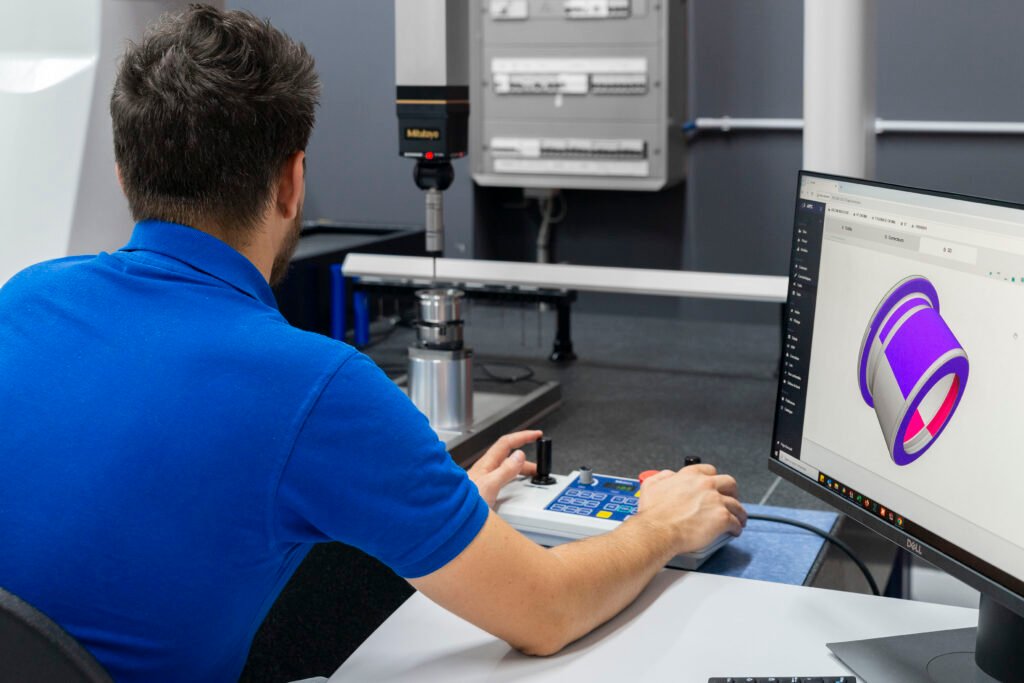
Was ist Closed-Loop-Manufacturing?
SPRECHEN SIE MIT UNSEREN EXPERTENDie Closed-Loop-Fertigung ist ein Verfahren zur Steuerung eines Produktionsprozesses, bei dem die Messwerte der Teile automatisch in Maschinenkorrekturen umgewandelt werden. Das Teil wird vermessen, die erforderlichen Anpassungen werden berechnet und auf die Maschine angewendet, wodurch der Regelkreis zwischen Messung und Produktion geschlossen wird.
Es baut auf der statistischen Prozesskontrolle (SPC) auf, geht aber noch einen Schritt weiter: Anstatt lediglich festzustellen, wann ein Prozess abweicht, berechnet es die Korrektur und wendet sie an. Der Ansatz von Clooma wurde auf der Grundlage der Forschungsergebnisse von Professor Maurice Pillet und die SYMME Labor an der Universität Savoie Mont Blanc in Frankreich.
In der Zerspanung basiert die Fertigung im geschlossenen Regelkreis auf zwei Prinzipien:
- Steuerung komplexer Prozesse, indem die gleichzeitige Korrektur von Dutzenden von Werkzeugversätzen gesteuert wird
- Korrektur von Prozessabweichungen, durch Dämpfungsfunktionen, die auf tatsächliche Abweichungen reagieren, nicht auf normale Schwankungen
Closed-Loop-Fertigung: drei Bedeutungen, ein Schwerpunkt
Der Begriff «Closed-Loop-Fertigung» wird in verschiedenen Zusammenhängen verwendet:
- Kreislaufwirtschaft: die Wiederverwendung von Schrott und Altprodukten als Rohstoff.
- Produktlebenszyklusmanagement: die Rückkopplung von Produktions- und Felddaten in die Produktentwicklung.
- Prozesssteuerung: die Rückmeldung von Messwerten in die Maschineneinstellungen während der Produktion.
Dieser Artikel konzentriert sich auf die dritte Bedeutung im Zusammenhang mit der Präzisionsbearbeitung, bei der die Regelung in geschlossener Schleife direkt zur Reduzierung von Ausschuss und Rüstzeiten beiträgt.
Wie funktioniert die Closed-Loop-Fertigung in der Zerspanung?
In einer Maschinenwerkstatt läuft die Fertigung im geschlossenen Regelkreis in einem einfachen Zyklus ab:
- Maß. Der Bediener misst ein oder mehrere Teile mit den Messgeräten der Werkstatt.
- Berechnen. Die Software analysiert die Ergebnisse im Hinblick auf die Toleranzen und die Prozesshistorie und berechnet die erforderlichen Anpassungen.
- Richtig. Die Werkzeugversätze werden an die CNC zurückgemeldet, ohne dass eine manuelle Berechnung oder Eingabe erforderlich ist.
Der Bediener muss nicht mehr selbst herausfinden, welche Versätze geändert werden müssen und um wie viel. Das übernimmt die Software – und zwar einheitlich in jeder Schicht.
Grundsatz 1: Steuerung komplexer Prozesse
Warum ist die manuelle Einstellung so schwierig?
Bei komplexen Bauteilen hängen die Maße voneinander ab: Die Änderung eines Werkzeugversatzes wirkt sich gleichzeitig auf mehrere Merkmale aus. Die Einrichtung der Maschine wird schnell zu einem Rätsel.
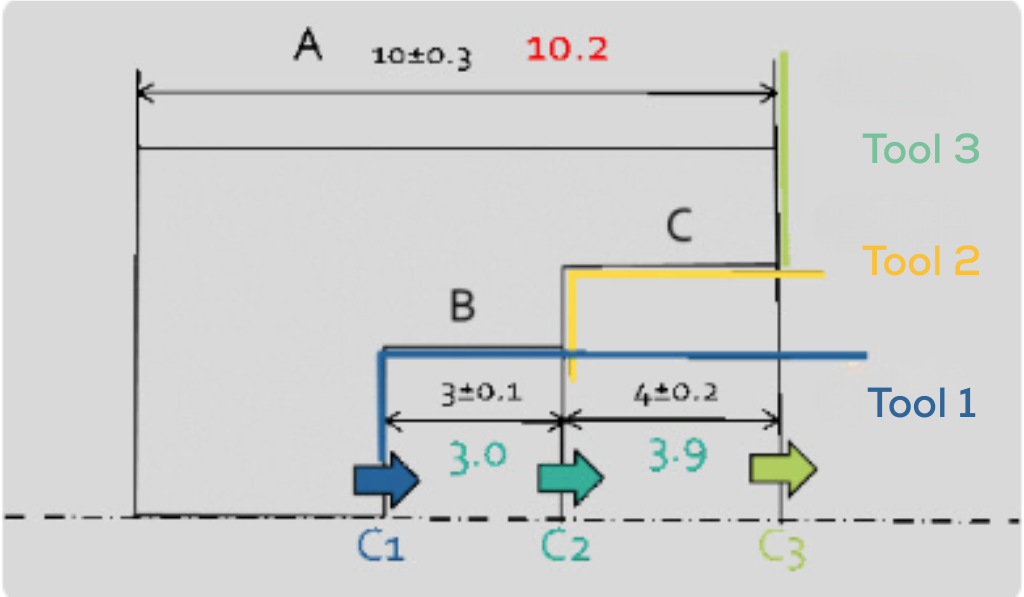
Nehmen wir das obige Beispiel. Dimension A Es misst 10,2 und liegt außerhalb der Toleranz. Um dies zu korrigieren, müssen Sie das Werkzeug einstellen. T3. Aber T3 wirkt sich auch auf die Dimension aus C, das derzeit innerhalb der Toleranz liegt. Daher müssen Sie auch das Werkzeug anpassen T2, was sich wiederum auf die Dimension auswirkt Bund so weiter.
Der Betreiber muss nun herausfinden, wie er die Anpassung vornehmen kann T1, T2 und T3 gemeinsam daran arbeiten, A wieder in den Spezifikationsrahmen zu bringen, ohne dabei B oder C zu verdrängen.
Dieses Beispiel ist einfach. Echte Bauteile weisen oft Dutzende von Merkmalen und Werkzeugen auf, und die manuelle Ermittlung der richtigen Kombination kann sehr zeitaufwendig sein und birgt ein hohes Fehlerrisiko.
Wie berechnet Clooma die optimale Anpassung?
Software für die Fertigung im geschlossenen Regelkreis wie Clooma berechnet automatisch die optimale Einstellung für jedes Werkzeug. Sie basiert auf einer Konfiguration, die auf zwei Arten erstellt werden kann:
- aufgrund der individuellen Auswirkungen jedes einzelnen Instruments oder
- aus einer 3D-Messdatei des Bauteils.
Ausgehend von den individuellen Auswirkungen der einzelnen Instrumente
Bei der Konfiguration von Clooma muss festgelegt werden, wie sich der jeweilige Werkzeugversatz auf die gemessenen Merkmale auswirkt. Die Frage, die man sich stellen muss, ist einfach: Wenn ich diesen Versatz ändere, welche Abmessungen verschieben sich dann?
Dies geschieht nur einmal, nämlich bei der Serienfertigkeit des Bauteils. Von da an berechnen die Algorithmen von Clooma die erforderliche Anpassung für jedes Werkzeug automatisch. Zum Beispiel:
T1: -0,3 mm · T2: -0,3 mm · T3: -0,2 mm
Aus einer 3D-Messdatei
Mit einer 3D-Messdatei ist die Konfiguration noch einfacher. Sie importieren die Datei und legen fest, welche Korrekturarten die Maschine anwendet. Die Algorithmen von Clooma übernehmen den Rest und berechnen die optimalen Einstellungen.
Egal, für welche Methode Sie sich entscheiden, das Ergebnis ist dasselbe: Der Bediener muss keine manuellen Berechnungen mehr durchführen. Die richtigen Anpassungen werden automatisch vorgenommen.
Grundsatz 2: Korrektur von Prozessabweichungen
The limits of SPC (Statistical Process Control)
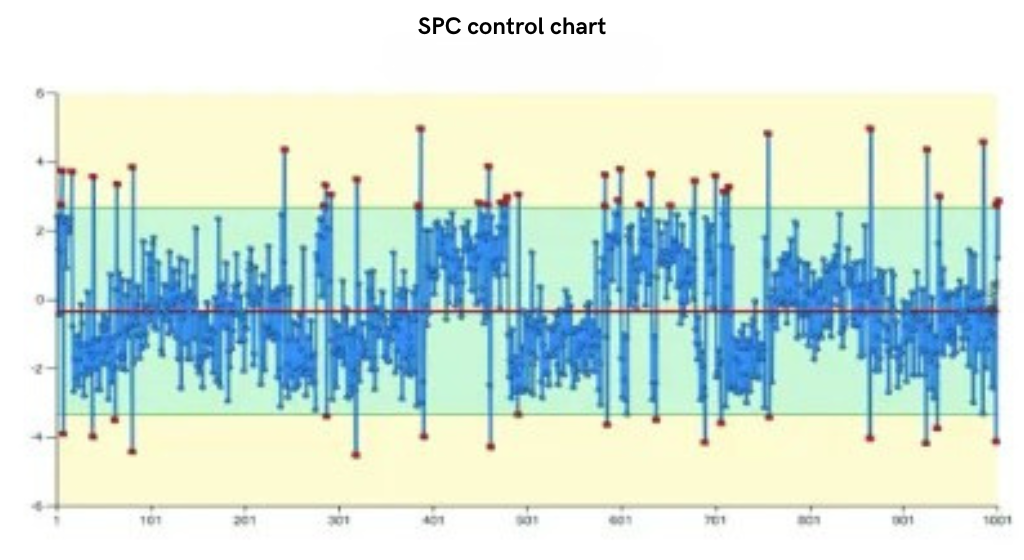
Bei der SPC werden Regelkarten zur Überwachung von Schwankungen eingesetzt. Der Prozess gilt als stabil, solange die Messwerte innerhalb der Regelgrenzen bleiben. Liegt ein Messwert außerhalb dieser Grenzen, ist der Prozess abgewichen und muss angepasst werden.
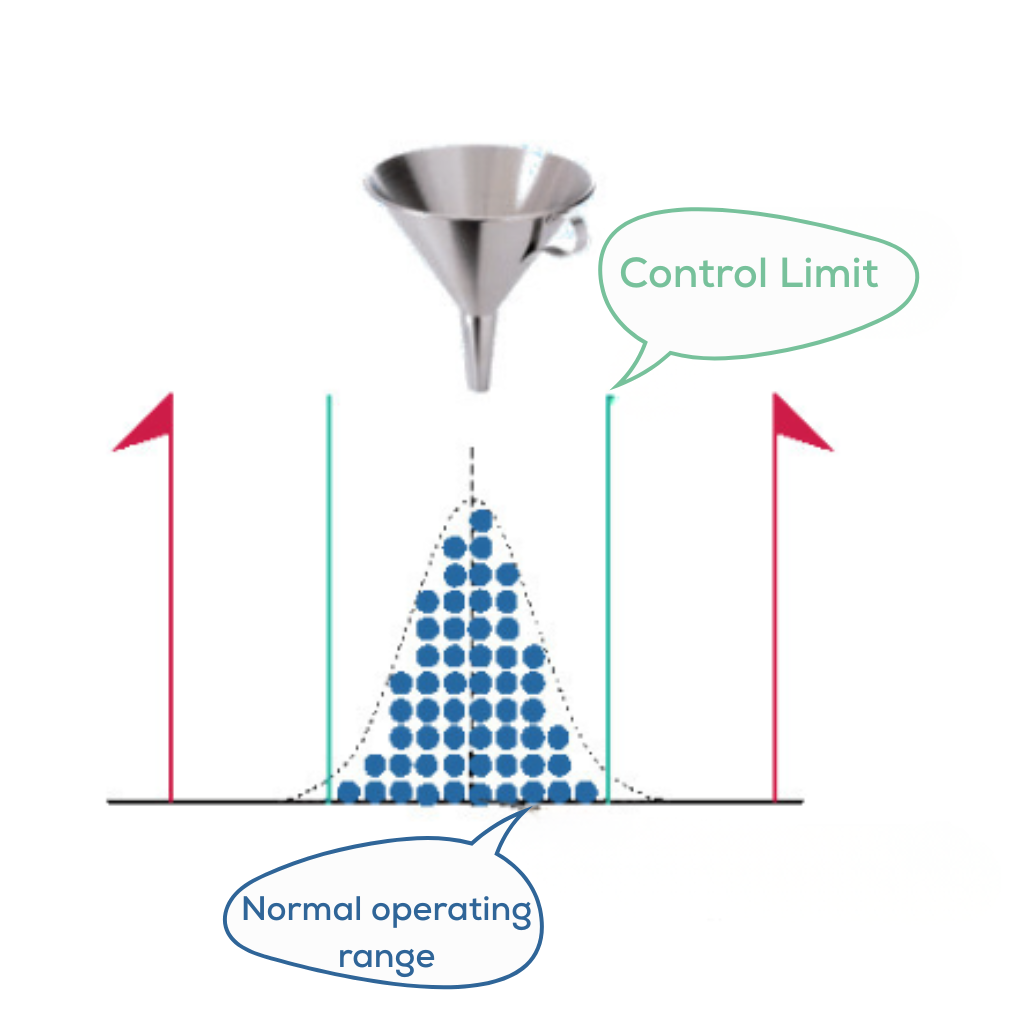
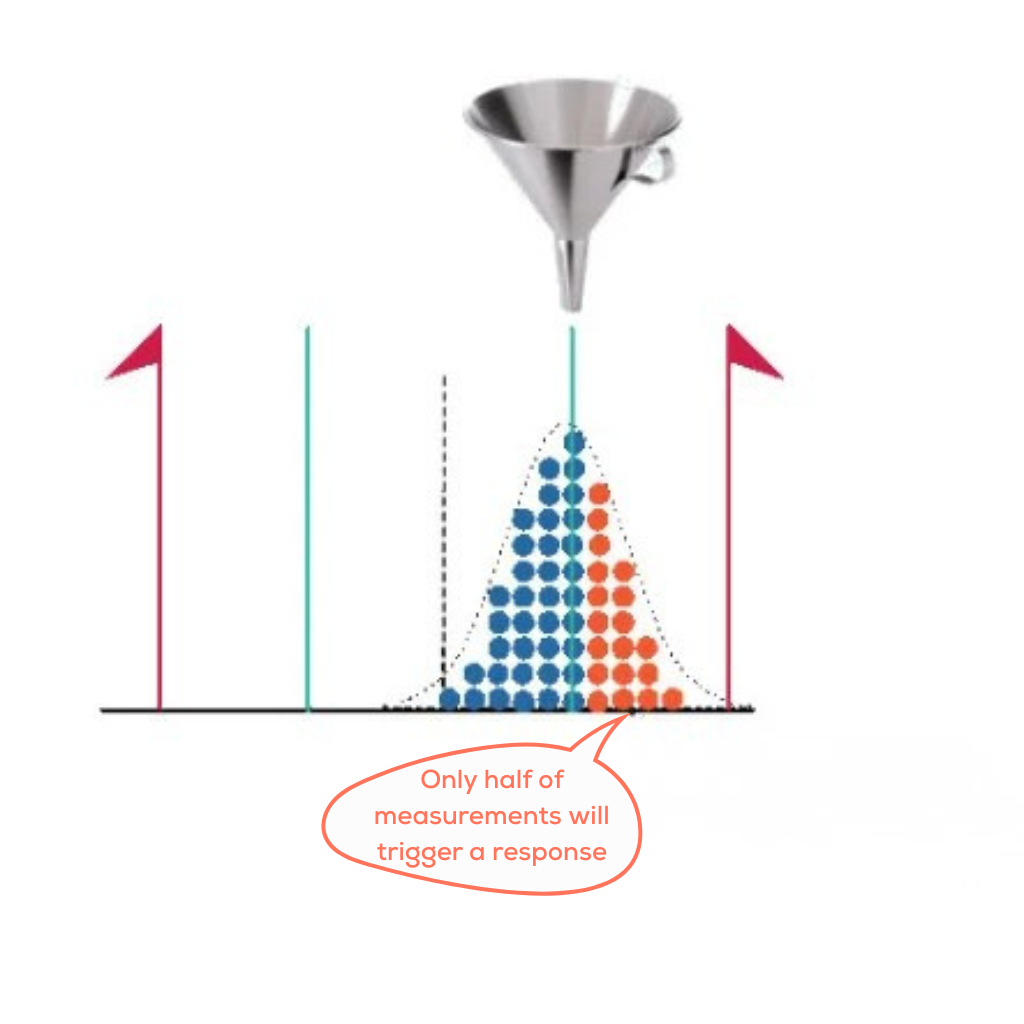
Das Problem ist, dass SPC erst dann reagiert, wenn der Prozess bereits erheblich abgewichen ist. Im folgenden Beispiel ist der Prozess eindeutig bereits abgekommen, doch nur etwa die Hälfte der Messwerte liegt außerhalb der Grenzwerte. Wenn schließlich Korrekturmaßnahmen eingeleitet werden, ist es bereits zu spät.
Wie Dämpfungsfunktionen die Drift korrigieren
SPC basiert auf einer binären Logik: innerhalb oder außerhalb der Grenzwerte. Die digitale Berechnung der Anpassungen ermöglicht eine wesentlich feinere Steuerung.
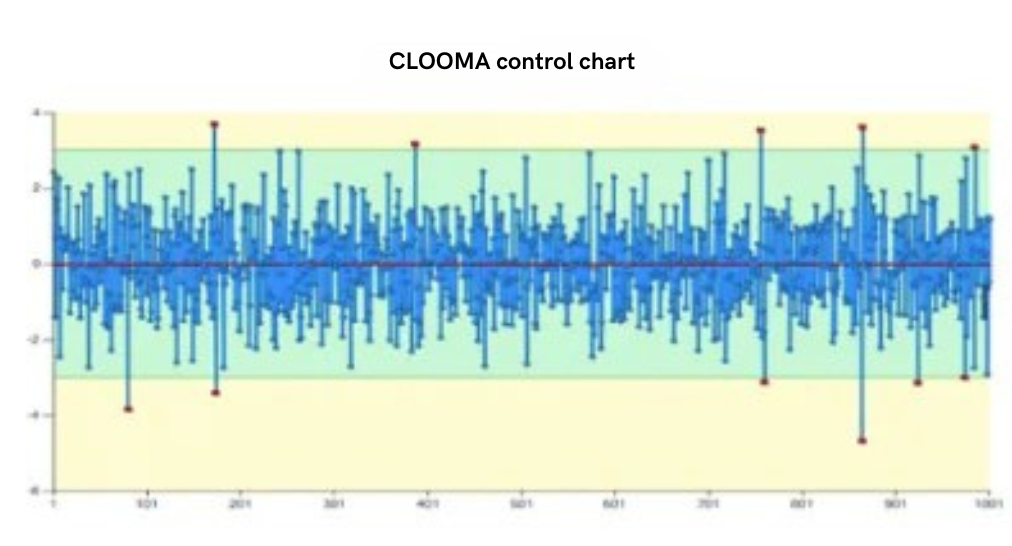
Mit Clooma wird der Prozess bei jeder Messung bewertet. Die Software berechnet eine Korrektur, die proportional zur Drift ist, und gewichtet dabei jedes neue Ergebnis anhand der Prozesshistorie. Kleine zufällige Schwankungen werden gedämpft, anstatt ihnen hinterherzulaufen, während eine tatsächliche Drift korrigiert wird, lange bevor sie die Toleranzgrenzen erreicht.
Die beiden folgenden Diagramme zeigen denselben Prozess, der zunächst mit herkömmlicher SPC überwacht und anschließend mit Clooma korrigiert wurde.
Mit herkömmlicher SPC überwachter Prozess :
Same process monitored with CLOOMA software :
Vorteile der geschlossenen Produktionskette
Im Vergleich zur herkömmlichen Prozesssteuerung bietet die Fertigung mit Regelkreis folgende Vorteile:
- Reduziert den Aufbau auf ein einziges Teil. Dank der automatischen Einstellung reicht ein einziges Teil aus, um die Maschine einzurichten. So lässt sich beispielsweise ein Getriebegehäuse, dessen Einrichtung früher einen halben Tag dauerte, nun in etwa 30 Minuten – also innerhalb eines einzigen Produktionszyklus – einstellen.
- Schneidet Reststücke ab. Weniger Einrichtungsteile und weniger Teile außerhalb der Toleranz in der Produktion. LISI beispielsweise hat seine Ausschussquote um 95% gesenkt.
- Verbessert die Prozessfähigkeit. Ppk-Werte über 1,33 bei kritischen Merkmalen werden erreichbar.
- Bewältigt komplexe Aufgaben. Dutzende, ja sogar Hunderte von Merkmalen werden gleichzeitig überwacht, und die Beziehungen zwischen den Abweichungen werden automatisch berechnet.
- Verhindert menschliche Fehler. Keine Rechen- oder Vorzeichenfehler mehr und einheitliche Anpassungslogik in jeder Schicht und jedem Team.
- Lässt sich schnell anwenden. Bediener können an einem einzigen Tag geschult werden.
Schlussfolgerung
Durch die Automatisierung der Prozessanpassung erreicht die Closed-Loop-Fertigung Qualitätsniveaus, die mit manuellen Methoden und herkömmlicher SPC nicht erreichbar sind, und setzt gleichzeitig Maschinenzeit frei, die sonst für Einrichtungs- und Korrekturvorgänge verloren geht.
Clooma wurde von Grund auf nach diesen Prinzipien entwickelt. Ganz gleich, ob Sie ein komplexes Bauteil steuern oder einen von der Norm abweichenden Prozess innerhalb der Toleranzen halten müssen – Clooma entlastet den Bediener von den Berechnungen und führt in Ihrem Betrieb eine neue Art der Prozesssteuerung ein.
Haben Sie noch Fragen?
Lesen Sie unseren FAQ oder siehe die LISI-Fallstudie.
Let's talk about your factory